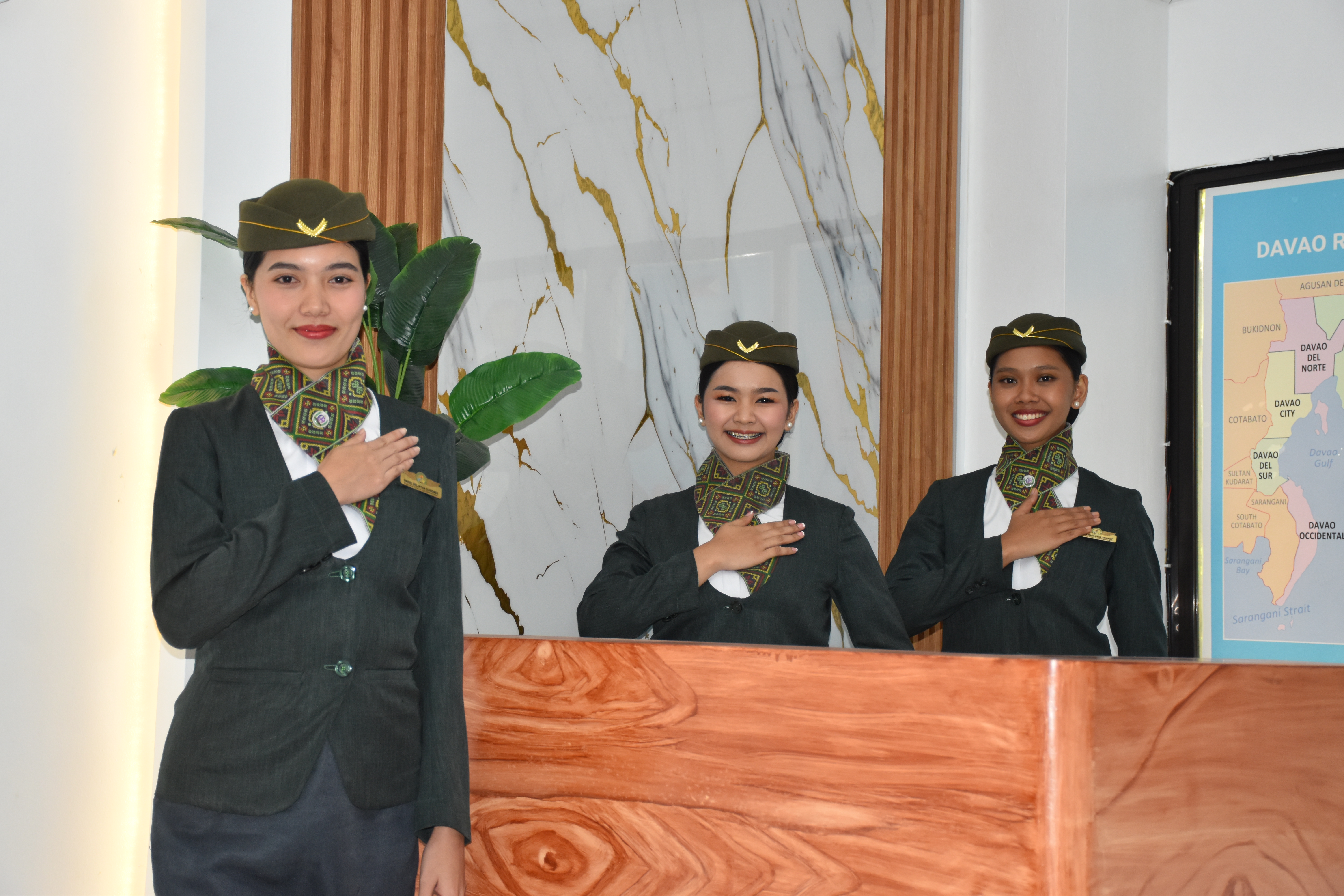
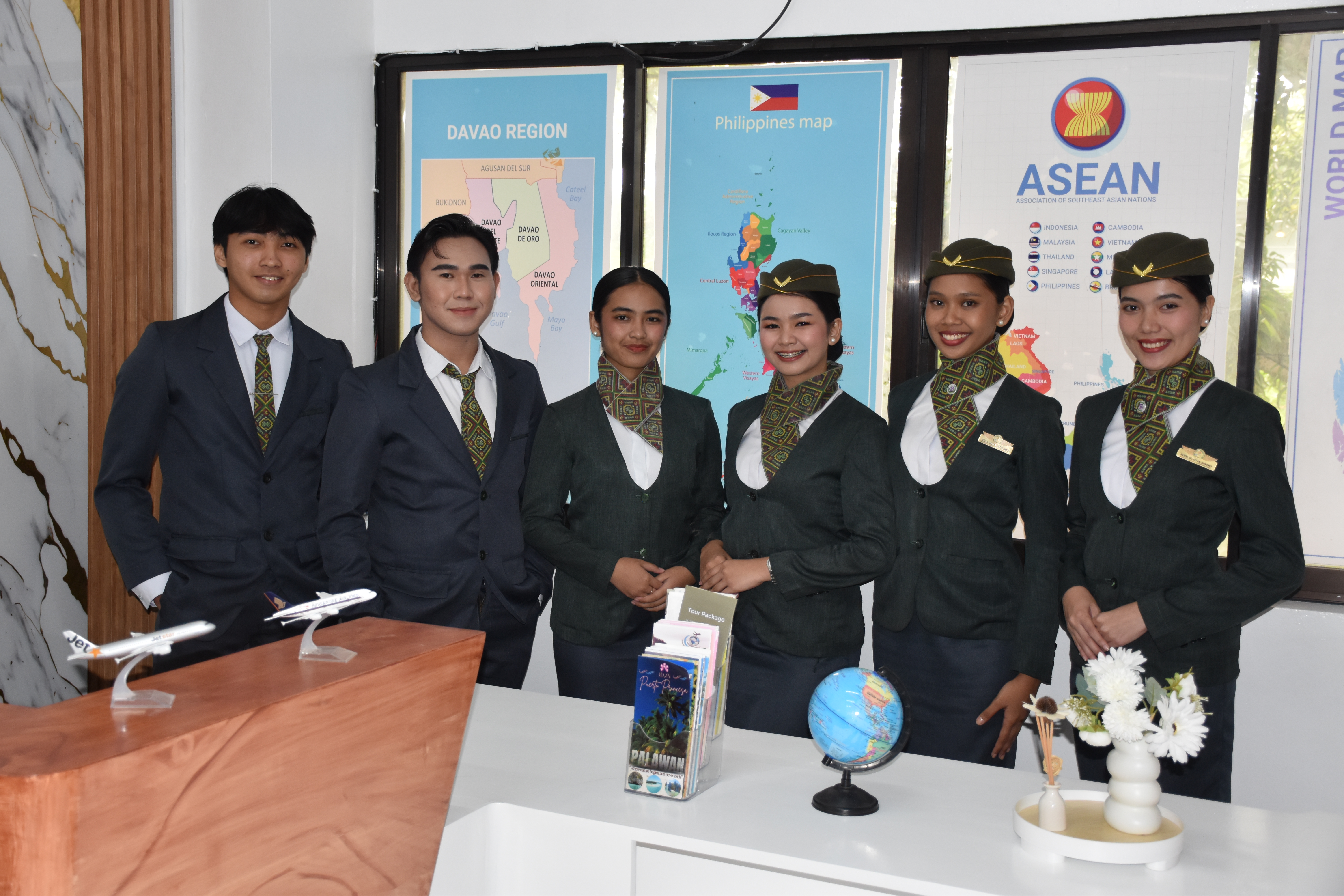
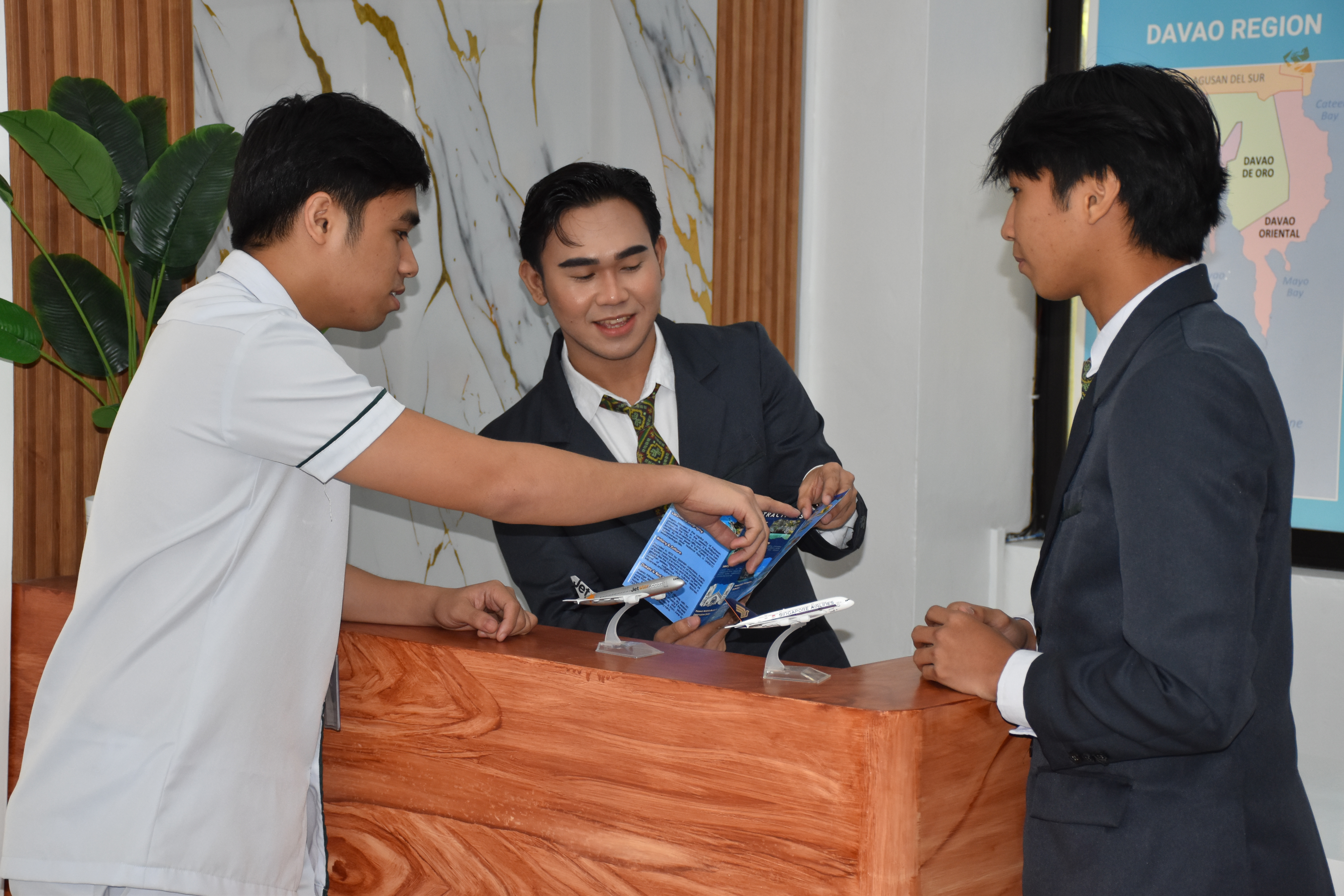
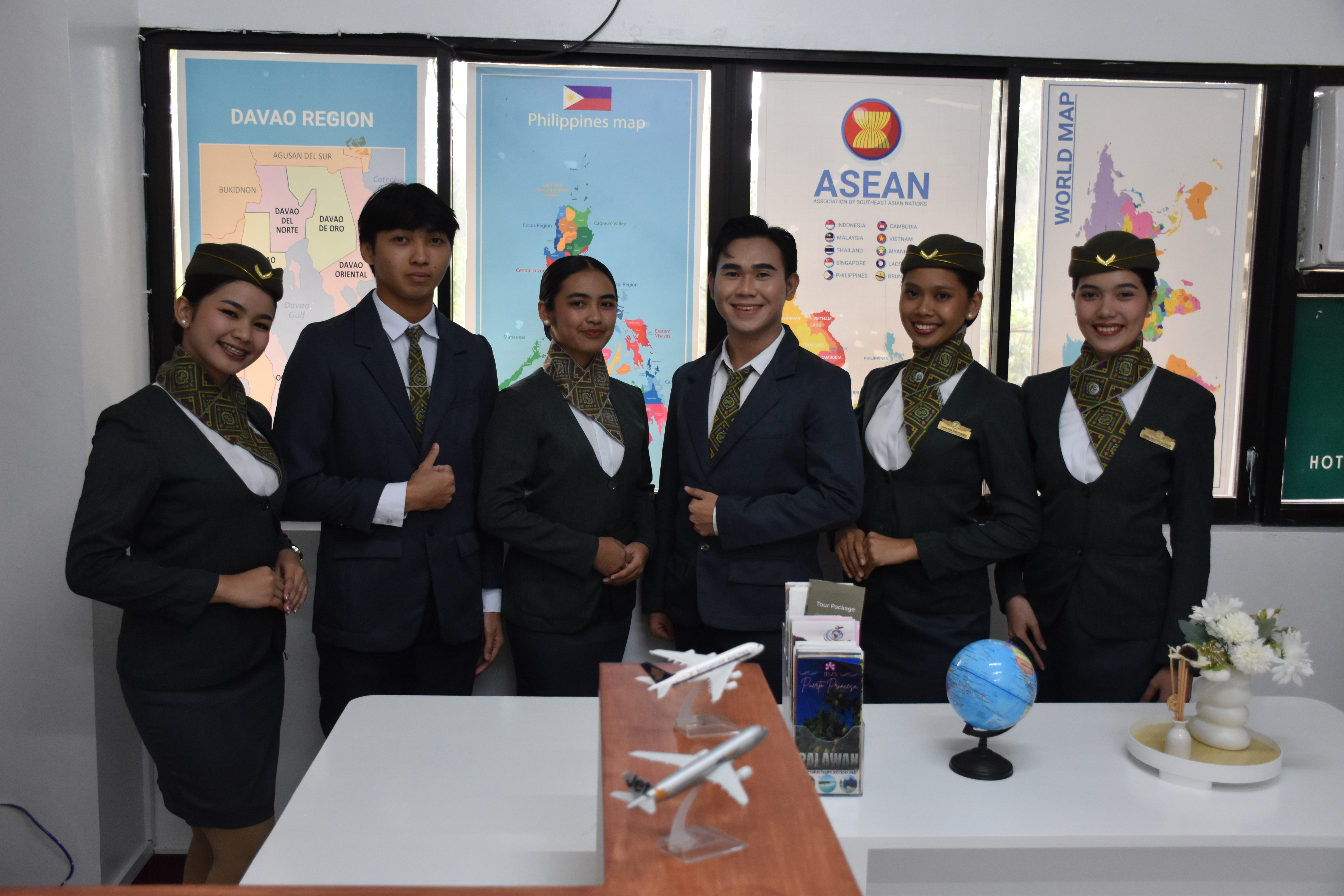
Bachelor of Science in Tourism Management
Welcome to the Bachelor of Science in Tourism Management. This program is to provide you with the essential information and tools necessary to navigate policies, procedures, and best practices. Discover the detailed insights into our School Vision, Mission, and Core Values, and the standards we uphold.
Our commitment to excellence, inclusivity, and innovation is reflected in the guidelines outlined here. We encourage you to familiarize yourself with the contents of this handbook, as it will not only facilitate your understanding of our organizational culture but also empower you to contribute positively to our collective goals.
Thank you for being an integral part of our team. Let this handbook be a guide as we journey together towards success and continued growth.
VISION: To be a leading academic program in Tourism Management, fostering innovation, global perspectives, and sustainable practices, empowering students to become industry leaders and contribute to the advancement of the tourism sector worldwide.
MISSION: To provide outstanding community focused tourism professionals with dynamic management and leadership skills grounded in significant, contemporary industry experience.
OBJECTIVES: The Tourism Management Program of Amya Polytechnic College aims to produce exemplary graduates who have:
- Research, plan and conduct various tour guiding services.
- Plan, implement and monitor tours and sales activities.
- Develop appropriate marketing programs and arrange the required travel services.
- Plan, organize, implement and evaluate MICE activities.
- Plan, develop and evaluate tourism sales and attractions.
Here's the summary of the Bachelor of Science in Tourism Management curriculum from AMYA Polytechnic College, Inc.
First Year
1st Semester (23 Units): Focuses on General Education (GE) cores and the foundations of accounting and risk management.
Core Subjects: Understanding the Self, Mathematics in the Modern World, Environmental Science.
Major Subjects: Risk Management (Safety/Security), Macro Perspective of Tourism and Hospitality, Fundamentals of Accounting.
Mandatory: PE 1 and NSTP 1.
2nd Semester (23 Units): Introduces specific geography and management principles.
Core Subjects: Science, Technology and Society; Living in the IT Era.
Major Subjects: Micro Perspective of Tourism and Hospitality, Philippine Culture and Tourism Geography, Tourism and Hospitality Marketing, Organization and Management.
Mandatory: PE 2 and NSTP 2.
Summer (6 Units):
Subjects: Quality Service Management in Tourism and Hospitality, Art Appreciation.
Second Year
1st Semester (23 Units): Shifts toward sustainability, culture, and finance.
Core Subjects: Life and Works of Rizal, Readings in Philippine History.
Major Subjects: Sustainable Tourism, Tour Guiding, Global Culture and Tourism Geography, Foreign Language 1, Business Finance.
Mandatory: PE 3 (Dance).
2nd Semester (23 Units): Develops communication skills and technical business tools.
Core Subjects: Purposive Communication, Gender and Society, The Contemporary World.
Major Subjects: Agri-Tourism, Multicultural Diversity in the Workplace, Foreign Language 2, Applied Business Tools and Technologies (with Lab).
Mandatory: PE 4 (Sports).
Summer (6 Units):
Subjects: Applied Economics, Ethics.
Third Year
1st Semester (15 Units): Focuses on specialized management niches.
Major Subjects: MICE (Meetings, Incentives, Conferences, and Events), Tour and Travel Management, Strategic Management (CBMEC), Entrepreneurship in Tourism, Business Marketing.
2nd Semester (15 Units): Introduces the first phase of research and operational logistics.
Major Subjects: Operations Management, Tourism Policy Planning and Development, Transportation Management, Travel Writing and Photography, Research in Tourism 1.
Fourth Year
1st Semester (15 Units): Finalizes theoretical studies, law, and professional ethics.
Major Subjects: Research in Tourism 2, Medical and Wellness Tourism, Legal Aspect in Tourism and Hospitality, Heritage Tourism, Professional Development and Applied Ethics.
2nd Semester (6 Units): Dedicated entirely to field experience.
Requirement:Practicum (600 hours).
